

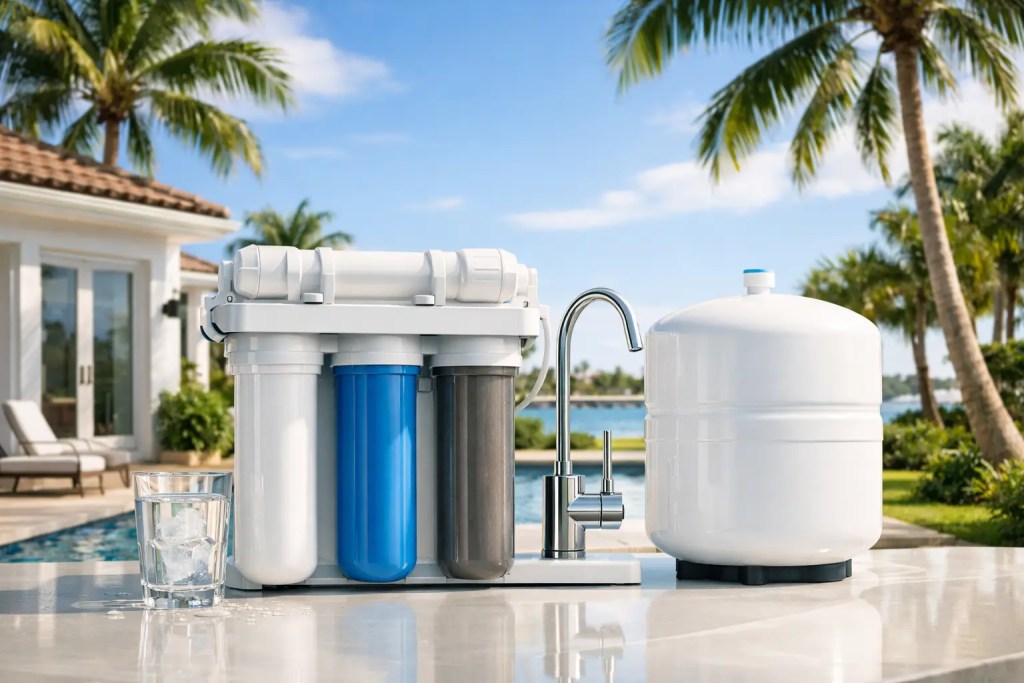
That glass of water from the kitchen tap may look clear, yet still carry the chlorine taste, dissolved minerals, or trace contaminants that make families reach for bottled water. The best reverse osmosis systems for home use address drinking and cooking water at the point where it matters most: your kitchen sink.
A reverse osmosis, or RO, system is not automatically the right answer for every water concern. It is an excellent tool for reducing many dissolved substances, but it works best as part of a thoughtful water plan. For Palm Beach County homeowners, that can mean pairing an under-sink RO system with whole-home filtration or softening when hard water, chlorine, and scale are also affecting showers, appliances, and plumbing.
What Makes a Home Reverse Osmosis System Worth Buying?
The best system is not necessarily the one with the longest feature list. It should match your household’s water, the space under your sink, and how much filtered water your family uses each day.
Reverse osmosis pushes water through a very fine membrane. That membrane helps reduce many dissolved contaminants, including lead, certain heavy metals, salts, and other impurities that basic carbon filters may not remove as effectively. Most home units also use sediment and carbon prefilters to catch particles and improve taste and odor before water reaches the membrane.
Start by looking for a system with components certified to applicable NSF/ANSI standards. NSF/ANSI 58 is the standard commonly associated with reverse osmosis systems. Certification matters because it provides third-party verification of specific performance claims. It is worth reading what a particular model is certified to reduce rather than assuming every RO unit removes every possible contaminant.
A well-built system should also have accessible replacement filters, a reliable shutoff valve, and clear maintenance requirements. A lower upfront price can lose its appeal if replacement filters are difficult to find, costly, or complicated to change.
Best Reverse Osmosis Systems for Home: Choose the Right Style
Most homeowners are deciding between a traditional tank system and a tankless RO system. Both can provide excellent drinking water. The better choice depends on your kitchen and daily routine.
Traditional tank RO systems
A traditional system filters water slowly and stores it in a small pressurized tank until you open the faucet. Because the water is already stored, it can provide a good pour rate for filling a coffee pot, water bottle, or cooking pot.
These systems are often a practical value and have a long record of dependable use. The trade-off is space. The filters, membrane, and storage tank can take up a meaningful portion of the cabinet beneath the sink. The stored water should also be used regularly, which is usually not a concern for an active household.
Tankless RO systems
Tankless systems filter water on demand and take up less cabinet space. Many offer faster flow rates than older RO designs, which is convenient for households that fill large water bottles or cook often.
They typically cost more upfront and use electricity to operate. Their flow rate, sometimes listed in gallons per day or GPD, should be considered alongside real-world output. A high GPD rating can be useful, but it does not replace good installation, appropriate water pressure, and timely filter changes.
Tankless systems also tend to produce less wastewater than older tank models, though every reverse osmosis system sends some water to drain as part of the filtration process. The ratio varies by model and water conditions. An honest comparison should include that consideration, especially for homeowners trying to minimize water use.
Systems with remineralization
RO filtration can reduce minerals along with unwanted dissolved substances. Some homeowners prefer the clean, light taste of standard RO water. Others like a final remineralization stage that adds back a small amount of calcium and magnesium for a more familiar taste.
This is largely a preference issue. Remineralization is not required for an RO system to work properly, but it can make the water more enjoyable for people who find pure RO water too neutral or flat tasting.
Match the System to Your Water Before You Buy
Water treatment should begin with the water itself, not a product box. Municipal water in areas such as Jupiter, West Palm Beach, and Boca Raton is treated before it reaches the home, but its taste, hardness, chlorine level, and plumbing-related issues can still vary from one property to the next.
A basic water review can identify whether sediment, chlorine, hardness, or a specific contaminant concern needs attention. If your home relies on well water, testing becomes even more important. Well water may require specialized pretreatment for iron, sulfur odor, bacteria, or other conditions before it reaches an RO membrane.
Hard water deserves special attention. Calcium and magnesium can create scale on fixtures, leave spots on dishes, and reduce the efficiency of water-using appliances. They can also shorten the life of an RO membrane. If hard water is significant, a water softener or scale-control solution installed before the RO system may protect the equipment and improve its performance.
Likewise, a whole-home carbon filter and an under-sink RO system do different jobs. Whole-home filtration is designed to improve water throughout the house, including showers, laundry, and appliances. An RO system provides a higher level of filtration for a dedicated drinking-water faucet. Many families choose both because they want better water everywhere and highly filtered water for drinking, ice, coffee, and cooking.
Capacity, Faucet Style, and Installation Details
Do not choose capacity based only on the number printed on the label. A family of four that drinks filtered water, fills reusable bottles, makes formula, and cooks at home will use more RO water than a household that only fills a few glasses each day.
For many families, a standard system with a properly sized tank is enough. A higher-output tankless model may make more sense when cabinet space is tight or filtered water is used heavily. If you have a refrigerator ice maker or water dispenser, ask whether the system can be configured to supply it. Not every installation should feed both the faucet and refrigerator without considering flow and pressure needs.
Installation quality matters as much as the equipment. The system needs a secure water connection, a proper drain connection, adequate incoming pressure, and enough room for future filter service. A professional installer can also check for leaks, confirm the system is flushing correctly, and show you how to use the shutoff valve.
The faucet deserves a little thought, too. Most RO systems include a dedicated drinking-water faucet, available in several finishes. Some homeowners prefer a modern separate faucet, while others choose a compatible three-way kitchen faucet that delivers hot, cold, and filtered water from one fixture. The right option depends on your sink layout and kitchen style.
What Ongoing Maintenance Really Looks Like
Reverse osmosis systems are low-maintenance, not no-maintenance. Sediment and carbon filters are usually changed more frequently than the membrane because they protect the membrane from particles and chlorine. The membrane often lasts longer, but its lifespan depends on water quality and how consistently prefilters are replaced.
Many systems use quick-change cartridges that make routine service easier. Even so, filter schedules should be based on the manufacturer’s guidance and your water conditions. A change in taste, slower flow, or a filter indicator can signal that service is due, but waiting for a problem is not the best maintenance plan.
Expect some annual cost for replacement filters. That cost is part of owning a system, just as replacing HVAC filters is part of maintaining your home. The value comes from having dependable filtered water available without recurring cases of bottled water, plastic storage, or last-minute store runs.
Common Questions Homeowners Ask
Does reverse osmosis remove chlorine?
An RO system’s carbon prefilters generally reduce chlorine before water reaches the membrane. This protects the membrane and improves taste. If chlorine is a concern in showers and throughout the home, a whole-home carbon filtration system is the more appropriate solution for that broader job.
Is a reverse osmosis system better than a refrigerator filter?
They serve different purposes. Refrigerator filters are convenient and can improve taste, but a properly designed RO system usually provides more stages of filtration and a dedicated membrane for reducing dissolved contaminants. Your refrigerator can often be supplied with RO water when the installation is planned correctly.
Will RO water solve every water problem in my house?
No. An under-sink RO system is for drinking and cooking water. It will not stop scale in your water heater, improve shower water, or protect dishwashers and washing machines. Those concerns call for whole-home treatment selected for the home’s specific water conditions.
Choosing an RO system should feel straightforward, not like a guessing game. A water professional can help you compare tank and tankless options, confirm what your water needs, and recommend a setup that fits your kitchen and budget. For homeowners in Palm Beach County, Honest Water of the Palm Beaches can provide that guidance and professional installation so your family can enjoy better-tasting water with confidence.
