
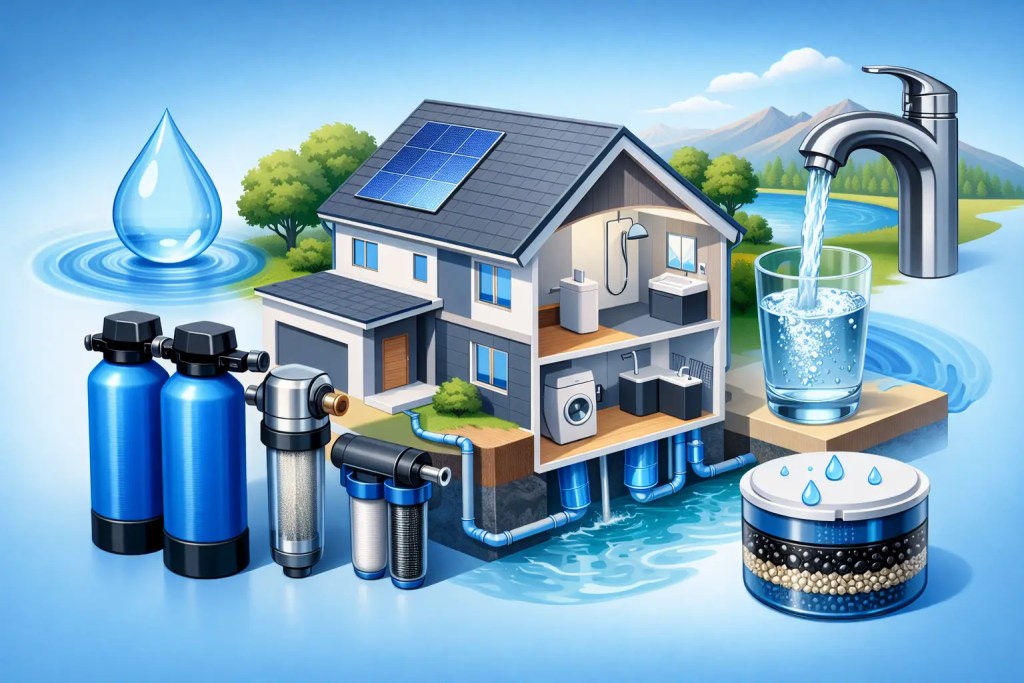
If your shower leaves your skin itchy, your glassware comes out spotted, and your tap water smells like a swimming pool, the problem usually is not one fixture – it is your water. The best whole home water filtration system treats water where it enters the house, so every tap, shower, appliance, and glass gets cleaner, better-performing water from the start.
What makes the best whole home water filtration system?
A lot of homeowners start by searching for one magic product. That sounds simple, but water treatment is rarely one-size-fits-all. The best system depends on what is actually in your water, whether you have city water or well water, how hard your water is, and what matters most in your home – health protection, softer water, better taste, appliance life, or all of the above.
That said, the best whole home water filtration system usually has a few things in common. It should remove common contaminants effectively, protect plumbing and appliances, maintain strong water pressure, and be sized correctly for your household. It should also be built with certified, high-quality components and installed professionally so it works the way it is supposed to work.
For many families, the right answer is not just a basic carbon filter. It is a properly matched system that can address chlorine, sediment, heavy metals, pesticides, and other unwanted contaminants, while also dealing with hard water if that is part of the problem.
Why homeowners choose whole-home filtration instead of point solutions
Countertop filters and under-sink units can help with drinking water, but they do not fix the water in your shower, laundry, dishwasher, or water heater. If the goal is cleaner water throughout the house, a whole-home approach makes more sense.
This is especially true when the water issue affects daily comfort. Chlorine and hard water can leave skin feeling dry and hair feeling rough. Sediment can clog fixtures. Mineral buildup can shorten the life of appliances and make water heaters work harder. A whole-home system tackles the source instead of asking you to patch the problem room by room.
For families with children, it is also a convenience decision. You do not have to remember which faucet is filtered. You get cleaner water for bathing, cooking, cleaning, and drinking, all from one central treatment setup.
The core features to look for
Contaminant reduction that matches your water
The first question is simple: what are you trying to remove? City water often brings chlorine, disinfection byproducts, and sometimes trace contaminants such as pesticides or heavy metals. Well water can involve sediment, bacteria, sulfur, iron, or manganese. Hard water can exist in either source.
A good system should be selected based on actual water conditions, not generic promises. If a company cannot explain what the system is designed to reduce and why that matters for your home, that is a red flag.
Strong water pressure
Homeowners often worry that filtration means weak showers. It should not. A properly sized system is designed to treat the home’s water without choking flow. That is why sizing matters so much. The wrong tank size or media volume can create frustration fast, especially in larger homes with multiple bathrooms.
Quality components and certification
Not all systems are built the same. Better systems use dependable valves, quality filtration media, and NSF-certified components where applicable. That matters because a water treatment system is not a small purchase. You want something built to perform for years, not a bargain setup that creates service issues later.
Professional installation
Installation is part of the product whether homeowners realize it or not. Even a high-end system can underperform if it is installed incorrectly, bypassed poorly, or matched to the wrong plumbing setup. Professional installation helps protect water pressure, system longevity, and warranty coverage.
Reasonable maintenance
Every water treatment system needs some level of upkeep. The question is whether that maintenance is predictable and manageable. Filter changes, periodic service, and salt refills for softeners should be easy to understand. The best setup is the one your household can keep up with without headaches.
Filtration alone or filtration plus softening?
This is where many homeowners get tripped up. A whole-home filter and a water softener are not the same thing.
A filtration system is designed to reduce contaminants such as chlorine, sediment, and certain chemicals or metals. A softener is designed to remove hardness minerals like calcium and magnesium that cause scale buildup, dry skin, dull laundry, and spots on dishes.
If your home has hard water, filtration alone may improve smell and taste but still leave behind the mineral problems you notice every day. In that case, the best whole home water filtration system may actually be a combination setup – filtration for cleaner water and softening for better performance throughout the house.
That combination is often the best value long term because it helps protect plumbing, reduce wear on appliances, and cut back on soap and cleaning product use.
What the best system does for daily life
Homeowners usually start with a contamination concern, but what keeps them happy with their system is how the water feels and functions every day.
Showers feel better. Skin and hair often feel less dry when chlorine and hardness are reduced. Dishes come out cleaner. Laundry can look and feel better. Water heaters, dishwashers, washing machines, and plumbing fixtures can stay cleaner internally, which may help them last longer and run more efficiently.
Then there is the drinking water side. A whole-home system improves the water coming into the house, but many families also pair it with reverse osmosis at the kitchen sink for highly purified drinking and cooking water. That setup gives broad household protection plus an extra level of refinement where it matters most.
How to tell if a company is selling the right system or just selling hard
Water treatment is a trust business. Most homeowners are not expected to know resin types, valve design, media depth, or micron ratings. That is exactly why the company matters.
A good provider should ask about your water source, household size, and the specific problems you are seeing. Better yet, they should use testing or clear evidence to support their recommendation. They should explain the difference between filtration and softening in plain English, walk you through maintenance, and be upfront about installation, warranty, and pricing.
Be cautious with vague claims like “removes everything” or systems presented as universal solutions. Real water treatment has trade-offs. Some homes need sediment prefiltration. Some need carbon filtration. Some need softening. Some need bacteria treatment. The right answer depends on the home.
That honesty matters. It is one reason many homeowners prefer working with a family-owned company that treats the sale like a long-term relationship, not a one-call close.
Best whole home water filtration system for Florida homes
In places like Palm Beach County, water problems often come with a mix of challenges rather than just one. Municipal water may carry chlorine taste and odor, while many homes also deal with hard water that affects fixtures, appliances, skin, and hair. That means the best whole home water filtration system for a Florida home is often a tailored package instead of a single basic filter tank.
For many local homeowners, the sweet spot is a whole-home filtration system paired with a softener and, if desired, a reverse osmosis drinking water system at the kitchen sink. That combination covers household comfort, plumbing protection, and cleaner drinking water without forcing you to piece together separate solutions on your own.
The price question homeowners always ask
Everyone wants better water, but nobody wants to overpay for it. That is fair.
The cheapest system is rarely the best value if it underperforms, restricts water pressure, or needs frequent repair. On the other hand, the most expensive option is not automatically the best either. What matters is whether the system fits your water, includes quality components, comes with professional installation, and is backed by a real warranty.
That is the difference between sticker price and long-term cost. A properly built system can help reduce scale-related wear, cut soap use, and lower the frustration that comes with poor water quality. When you factor in appliance protection and everyday comfort, value becomes a lot clearer.
If you are comparing options, ask what is included. Installation, prefilters, drinking water add-ons, warranty coverage, and service support can change the real cost significantly.
A smart way to choose
The best buying decision usually starts with a simple question: what do you want your water to do better?
If you want cleaner bathing water and less chlorine exposure, start there. If hard water is ruining fixtures and making housekeeping harder, address that too. If drinking water quality is the top concern, consider a whole-home system plus reverse osmosis. The right setup should solve the problems you actually have, not the ones a brochure assumes you have.
At Honest Water of the Palm Beaches, that practical approach is the point – better water, built around your home, at a price that makes sense.
Cleaner water should make life easier, not more complicated. When a system is matched correctly, installed professionally, and built to last, you stop thinking about your water problems and start enjoying your home again.
