
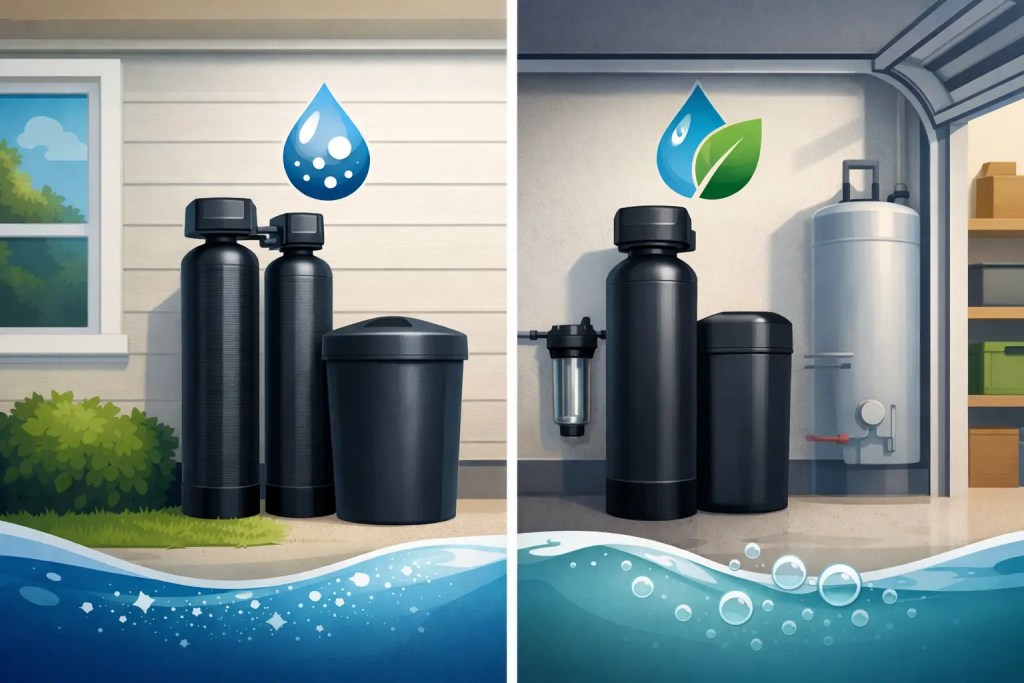
A glass shower door can tell you a lot about your water. If it quickly develops chalky spots, your faucets crust over, and laundry feels stiff, hard water minerals are likely part of the problem. When comparing a salt based vs salt free softener, the first thing to know is that these systems work in very different ways, even though both are often sold as answers to scale.
For many Palm Beach County homeowners, the better choice comes down to what you want the system to do. Do you want to remove the minerals causing hardness, or mainly reduce the way those minerals stick to plumbing and fixtures? That distinction affects your dishes, skin and hair, appliance protection, maintenance, and long-term cost.
Salt based vs salt free softener: the key difference
A salt-based water softener is a true softener. It removes hardness minerals, primarily calcium and magnesium, through a process called ion exchange. Inside the system is a bed of resin that attracts those hard minerals and exchanges them for a small amount of sodium or potassium.
A salt-free unit does not remove calcium and magnesium from the water. Most salt-free systems are better described as water conditioners or scale-reduction systems. They use specialized media to change the behavior of hardness minerals so they are less likely to form hard scale on pipes, water heaters, fixtures, and appliances.
That difference is not just technical wording. If your goal is the noticeably slick feel of softened water, less soap use, spot-free dishes, and maximum mineral removal, a salt-based softener is usually the stronger option. If you want a low-maintenance approach to managing scale without salt or regeneration, a salt-free conditioner may make sense.
What a salt-based softener does well
Salt-based softeners are the proven choice for homes with moderate to high hardness. They can make a dramatic difference in the everyday signs homeowners notice: soap lathers more easily, towels feel softer, glassware comes out cleaner, and mineral buildup becomes easier to control.
They also protect equipment that heats or uses water. Calcium scale can collect inside water heaters, dishwashers, washing machines, showerheads, and plumbing fixtures. Removing hardness minerals before they travel through the home helps reduce that wear and can support more efficient operation over time.
The trade-offs of a salt-based system
A traditional softener needs a brine tank filled with water-softener salt. Periodically, it regenerates, flushing the collected hardness minerals from the resin and preparing it to keep softening. That means there is an ongoing salt cost, some water use during regeneration, and a discharge line that must be installed correctly.
The softened water also contains added sodium. The amount depends on how hard the incoming water is and how much water your household uses. For most households, this is not a concern, but anyone following a strict sodium-restricted diet should discuss their water setup with a qualified professional and their healthcare provider. Potassium chloride can be an alternative in some systems, although it generally costs more.
Salt-based softeners are often paired with a reverse osmosis drinking water system at the kitchen sink. This gives families the benefits of soft water throughout the home while providing highly filtered drinking and cooking water at the tap.
What a salt-free conditioner does well
A salt-free conditioner is attractive because it requires no salt bags, no brine tank, and no regeneration cycle. It does not add sodium to the water and usually has lower routine maintenance needs than a conventional softener.
For homes with mild hardness, or homeowners mainly focused on reducing mineral scale around plumbing and appliances, it can be a practical option. These systems can also be helpful where brine discharge is a concern or where space is limited.
The water still contains calcium and magnesium, however. That means it may still leave some spots when it dries, and it will not provide the same changes in soap performance, laundry feel, or bathing experience that a true softener can provide. A salt-free conditioner can reduce scale, but it does not create soft water.
Why expectations matter with salt-free systems
Salt-free technology is sometimes marketed as a replacement for every water softener. For the right home, it can be useful. But homeowners deserve a clear explanation of what it can and cannot do.
If you are tired of heavy white buildup on fixtures and want softer hair, smoother-feeling skin, and less detergent use, a conditioner may leave you disappointed because the hardness minerals remain in the water. If your top priority is avoiding salt and lowering maintenance while taking a reasonable step against scale, it may be the better fit.
Which option is better for South Florida water?
There is no one-size-fits-all answer, especially across Palm Beach County. Municipal water quality can vary by neighborhood, and homes may also have different plumbing, household sizes, water-use habits, and treatment goals.
A water test is the smart starting point. It shows the hardness level and can also reveal concerns that a softener or conditioner will not address, such as chlorine, sediment, iron, sulfur odors, PFAS, or other contaminants. Water softening solves a specific mineral problem. It is not the same thing as whole-home filtration or drinking water filtration.
For example, a family in Wellington with hard water, frequent laundry loads, and a tank-style water heater may benefit most from a properly sized salt-based softener combined with whole-home filtration. A part-time home in Jupiter with lighter water use and a simple goal of limiting scale may be a reasonable candidate for salt-free conditioning. The best recommendation should follow the test results, not a one-product sales pitch.
Cost and maintenance: look beyond the purchase price
A salt-free conditioner may cost less to maintain because it does not require monthly salt purchases or regeneration water. Its media still has a service life, though, and replacement requirements vary by system and incoming water conditions.
A salt-based softener has regular salt costs, but it may deliver more visible benefits in homes with significant hardness. Demand-initiated systems can regenerate based on actual water use rather than a fixed timer, helping reduce unnecessary salt and water use. Correct sizing matters here. An oversized or poorly programmed unit can waste resources, while an undersized one may struggle to keep up with a busy household.
When comparing quotes, ask what is included: water testing, installation, bypass valves, drain connections, programming, warranty coverage, and future service. Premium, properly certified equipment and professional installation can cost more upfront, but they often prevent the frustrating leaks, performance issues, and premature replacements that come with a shortcut installation.
Questions to ask before choosing
Before deciding between a softener and conditioner, get clear on your priorities. Are you trying to remove hardness minerals or simply reduce their ability to form scale? Do you notice dry skin, dull hair, stiff laundry, cloudy dishes, or frequent fixture buildup? How many people live in the home, and how much water do you use?
Also ask whether you need filtration in addition to hardness treatment. Chlorine taste and odor, sediment, and drinking-water concerns require different treatment media. A well-designed whole-home setup can combine the right solutions without paying for equipment that does not address your actual water conditions.
Finally, ask about local installation considerations. Drain access, available space, plumbing layout, and any applicable community or municipal requirements can influence which system is most practical for your home.
Choose the result you want from your water
If true soft water is the goal, a salt-based system is generally the clear choice. If low maintenance and salt-free scale management matter more than mineral removal, a quality salt-free conditioner can be a sensible alternative.
The most helpful next step is a straightforward water evaluation and a recommendation built around your home, not a generic package. Honest Water of the Palm Beaches can help homeowners understand their test results, compare practical options, and choose a system that supports better water at every tap.
